
Pneumatic Control Panels
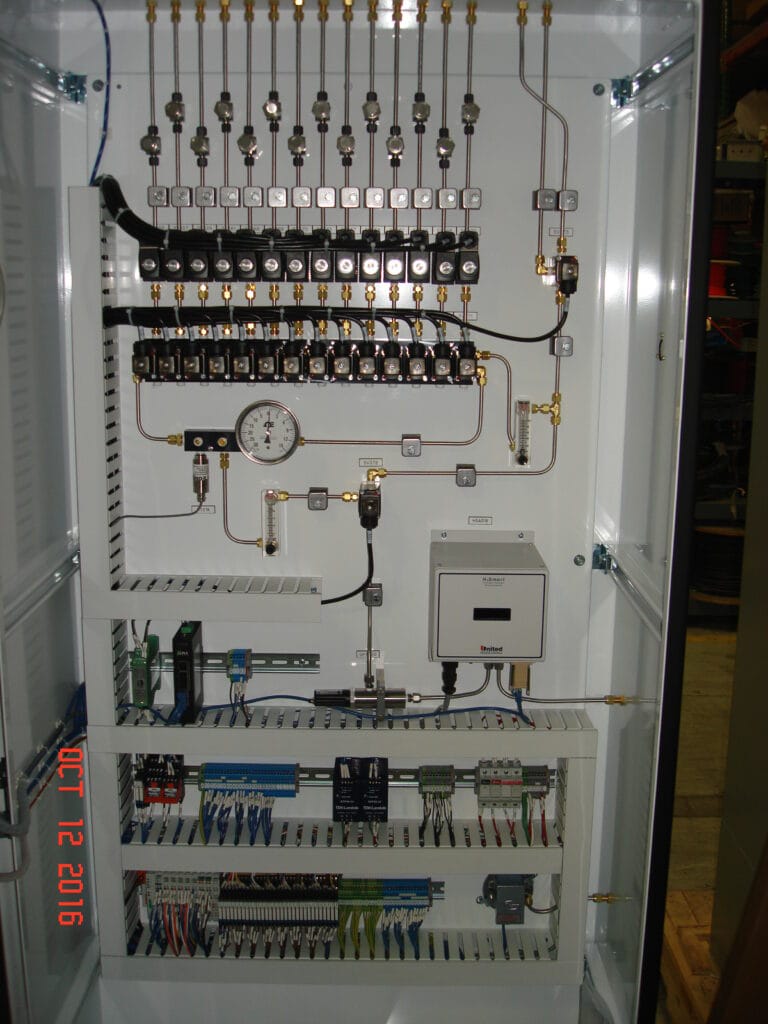
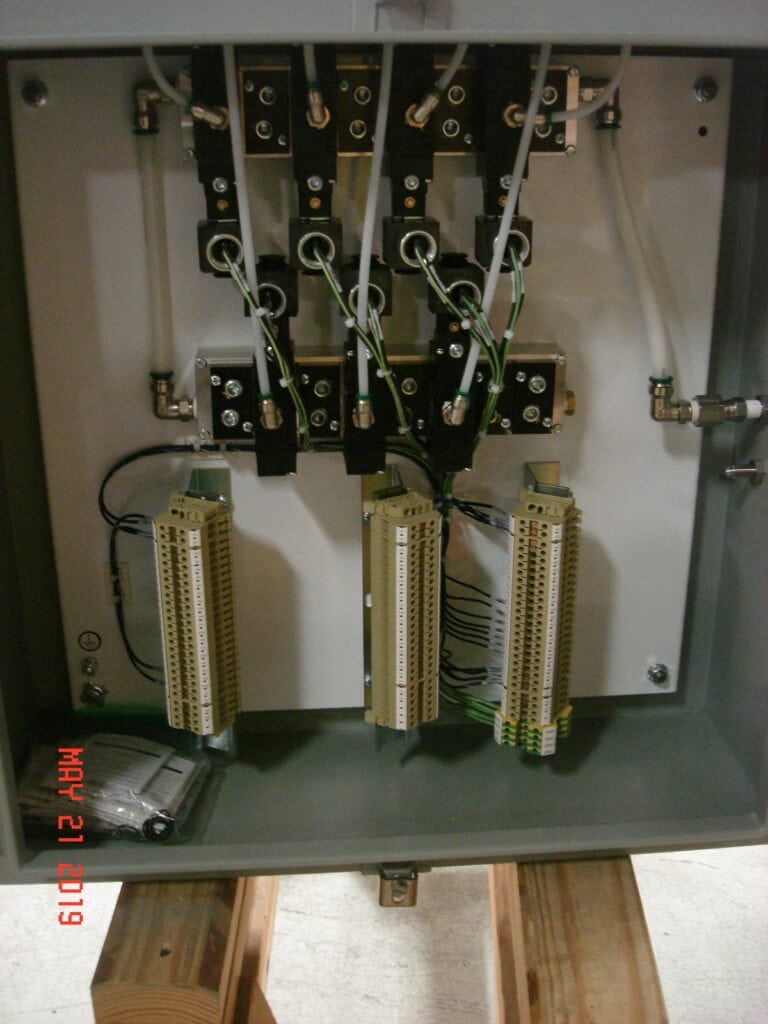

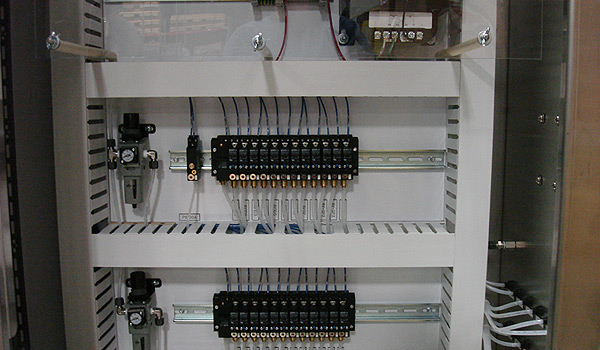
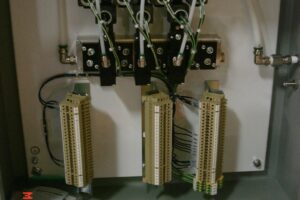
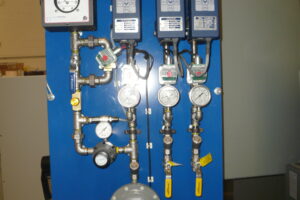
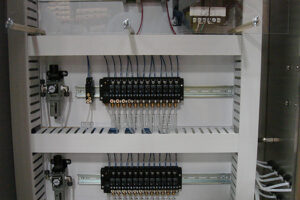
Panel-Fab has manufactured custom panels for industrial and commercial applications across North America since 1979. We specialize in pneumatic control panels. These panelized air-control systems are engineered to operate actuators, valves, and tools in environments where reliability and intrinsic safety are critical. If you are comparing technologies or sourcing a new fabricator, this page explains how pneumatic control panels work, why buyers choose them, and where they fit.
What Are Pneumatic Control Panels?
Pneumatic control panels use compressed air as the control medium to drive motion and process actions. A control signal (often from a PLC, relay, or local pushbuttons) actuates solenoid valves inside the panel. The valves route regulated air to cylinders, grippers, diverters, and other pneumatic devices.
A typical panel integrates regulators, filters, manifolds, solenoids, gauges, and fittings in an enclosure that matches the installation environment. We build from customer drawings or a defined functional spec. Our team lays out the panel, assembles components, wires valve coils, and I/O as required, and verifies operation before shipment.
For projects that involve custom panels across multiple sites, we can standardize the layout and bill of materials to keep reorders consistent.
Benefits of Pneumatic Control Panels
Facilities managers and engineers prioritize pneumatic control panels to maximize uptime in challenging operating conditions. These systems provide specific operational advantages:
- Intrinsic safety in hazardous locations. Because compressed air does not generate ignition sources, these panels are ideal for Class I, Division 1 or 2 environments where electrical sparks pose a fire risk.
- Strong performance in harsh environments. Moisture, washdown, dust, and chemical exposure are easier to manage with pneumatic components than with exposed electronics.
- High force output at manageable cost. Pneumatic actuators deliver high force without the complexity and fluid management that many hydraulic systems require.
- Simpler maintenance and troubleshooting. Technicians can swap common pneumatic components quickly. Many tasks do not require specialized calibration tools.
- Fail-safe behavior by design. Systems can default to a safe state if air pressure drops, based on valve selection and circuit design.
Applications
Teams use pneumatic control panels across a wide mix of industries. Below are examples that match how customers deploy our custom panels in the field.
- Food & Beverage. Washdown areas and humid process spaces often call for pneumatic controls on fillers, conveyors, and packaging equipment.
- Material Handling, Logistics, and Warehousing. Conveyor diverters, sortation lanes, and pneumatic actuators rely on panels built to integrator or OEM drawings. Sites also value fast serviceability during peak throughput windows.
- Automotive. Assembly, stamping support systems, and transfer operations use pneumatics for clamping, indexing, and part movement where cycle time stays tight.
- Data Centers. Support equipment and infrastructure systems use pneumatics in controlled environments where repeatability and standardized builds help across multi-site rollouts.
- Process Control. Valve manifold panels support chemical, water treatment, and gas-handling systems. Requirements often include UL-listed industrial control panel builds or project-specific documentation packages.
- Military / Navy. Programs may require Mil-Spec-compliant custom panels and certification support. We build panels to meet applicable UL 508A, UL 698A, ESA, CE, ETL, VDE, and Mil-Spec project requirements.
- Machine Tool / Manufacturing. Pneumatic control enclosures support lathes, grinders, CNC equipment, and automated assembly lines. We build and test to the print, then ship panels that arrive ready for installation.
Contact Panel-Fab to Learn More
If your project calls for pneumatic control panels, we can build to your drawings or help finalize a build spec for quoting. Our team tests panels before shipment, with checks such as valve actuation, pressure regulation behavior, and basic functional verification against the design intent.
Send your drawings, I/O list, and service conditions. Include any enclosure requirements and certifications your site needs. We will confirm the fit, timeline, and build approach for your custom panels.
Request a Quote to submit specifications for pricing and lead time.
Contact Us to ask about capacity, certifications, or project fit.